
Trauma can change how your mind and body respond to the world. For some people, those memories fade naturally. For others, the aftereffects linger: nightmares, flashbacks, tension, fear, or feeling constantly “on alert.” These reactions can make daily life feel exhausting — but they are treatable.
At our clinic, we help people explore modern, neuroscience-informed PTSD treatment in Cincinnati, OH, in a setting that feels steady, grounded, and safe.
Our Cincinnati location supports individuals from Price Hill and Westwood, Downtown and Over-the-Rhine, Northside and Avondale, Hyde Park and Mount Lookout, and surrounding Southwest communities.
If trauma symptoms and a diagnosis have made life feel smaller or harder to navigate, you’re not alone — and there are meaningful paths forward.
PTSD (post-traumatic stress disorder) in Ohio can develop after experiencing or witnessing a traumatic event — such as an accident, assault, sudden loss, medical crisis, or long-term abuse. It affects how the brain processes danger, memory, and safety.
Instead of trauma remaining in the past, PTSD can make it feel like parts of the experience are still happening — in your sleep, your emotions, and your nervous system. This isn’t a sign of weakness. PTSD is a whole-body stress response that forms when the mind and body have been overwhelmed.
PTSD is real. And with informed PTSD treatment in Cincinnati, OH, healing is possible.

Living with PTSD means navigating constant fight-or-flight reactivity, distressing flashbacks, and exhausting trauma responses. At New Pathways Clinic in Cincinnati, we provide modern, evidence-based care tailored for individuals looking to break free from stubborn trauma patterns when standard treatments haven’t done enough. Our dedicated care team helps you explore specialized options designed to heal deep emotional wounds and restore balance.
While originally FDA-approved as an anesthetic, Ketamine is a modern off-label treatment option for individuals in Cincinnati struggling with persistent trauma responses, flashbacks, and fight-or-flight reactivity.
By encouraging neuroplasticity and calming overactive fear centers in the brain, IV Ketamine Therapy helps interrupt deeply engrained trauma loops, allowing patients to step back from painful memories and rebuild a true sense of internal safety.
Ketamine-Assisted Psychotherapy (KAP) pairs low-dose ketamine with clinical psychotherapy to support adults struggling with complex trauma and persistent PTSD symptoms.
By helping to temporarily quiet an overactive fight-or-flight response, KAP in Cincinnati allows patients to safely engage with a therapist to unpack deeply rooted trauma patterns and build long-term emotional resilience.
Intrusion Symptoms
Flashbacks, nightmares, and sudden surges of fear can make it feel like the trauma is happening again. Intrusive thoughts may arise in everyday places around Cincinnati — like hearing a sudden loud noise near downtown, passing certain neighborhoods, or encountering sensory reminders in public spaces.
Changes in Mood & Cognition
PTSD can lead to emotional numbness, guilt, shame, loss of interest in activities, or seeing the world as unsafe. People may feel disconnected from others or from their previous sense of self.
Hyperarousal & Reactivity
Hypervigilance, irritability, being startled easily, sleep problems, and difficulty concentrating are common. Many patients from Price Hill and Northside describe feeling “always on guard,” even in familiar environments.
Trauma overwhelms the brain’s stress-response systems. Factors that contribute include:
None of these causes mean you’re “broken.” PTSD is a biological and emotional reaction to experiences that were too much for the system to manage at the time and can heal with appropriate Cincinnati PTSD treatment.
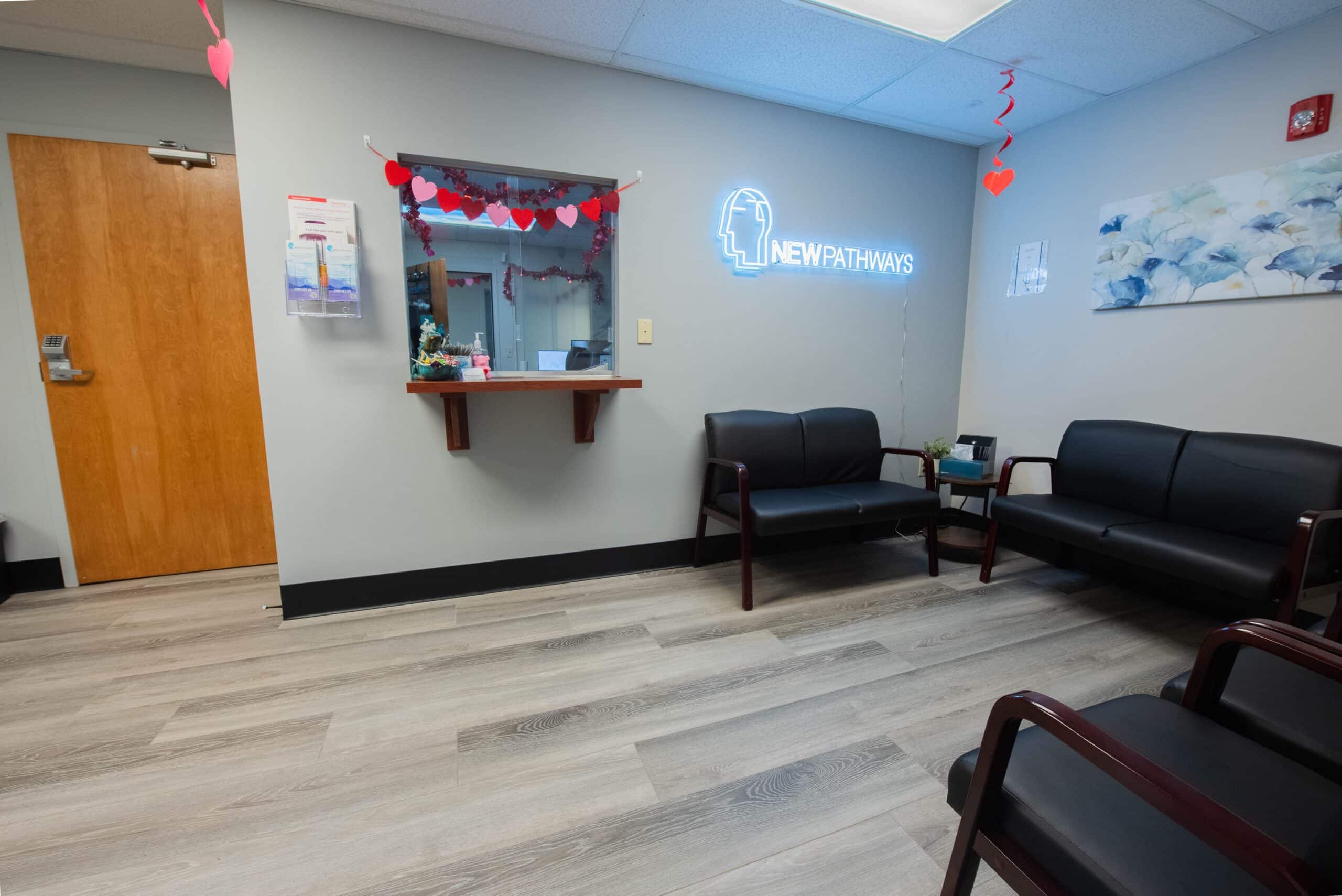
Your appointment at our Cincinnati clinic is calm, private, and paced at your comfort level.
You’ll have room to ask questions, explain what brings you in, and explore whether treatment options might fit your needs. Nothing is rushed. Nothing is forced. You lead the pace with PTSD treatment in Cincinnati, OH — we provide the support.
Our clinic is centrally located for residents across the region. We regularly welcome patients from: Downtown Cincinnati, Westwood, Mount Lookout, Avondale, Northside, Price Hill, Hyde Park, Over-the-Rhine, and surrounding Southwest neighborhoods.
With convenient parking and a private environment, getting care feels more accessible and less stressful with New Pathways.
1. SCHEDULE
AN EVALUATION
2. FILL OUT
OUR ONLINE FORM
3. EVALUATION
WITH OUR PROVIDER
4. MAKE
APPOINTMENTS
5. RECEIVE
TREATMENTS
6. MAINTAIN
TREATMENT PLAN
You may want to seek PTSD treatment in Cincinnati if symptoms such as nightmares, flashbacks, avoidance, irritability, or hypervigilance begin interrupting your daily routines or relationships. People from Westwood and Northside often reach out when triggers around Downtown Cincinnati, certain streets, or familiar places start feeling harder to manage.
You don’t need to wait until things feel unmanageable; early evaluation often leads to better outcomes. If you ever experience thoughts of harming yourself or feeling unsafe, call 988 or visit the nearest emergency department immediately.
PTSD triggers vary widely, but many residents from Price Hill and Hyde Park describe moments when everyday reminders bring trauma feelings rushing back. These may include certain sounds, crowded areas near Findlay Market, heavy traffic, or places connected to past events. Emotional triggers — like feeling trapped, dismissed, or startled — can also activate symptoms.
Triggers don’t need to make sense to anyone else; they’re shaped by how your nervous system protected you during trauma. At our Cincinnati clinic, we help people understand their triggers and explore ways to reduce their impact through modern PTSD treatment options.
Yes — PTSD can intensify when left untreated. Many individuals from Hyde Park and Mount Lookout notice symptoms expanding into more areas of life: difficulty sleeping, increased irritability, avoidance of more places, emotional numbness, or chronic tension.
Hyperarousal can also become stronger, making it feel like your body is always “on alert,” whether you are walking past the Roebling Suspension Bridge or running errands downtown. Untreated PTSD in Cincinnati can also increase the risk of depression, substance use, and relationship strain. Early intervention often leads to better long-term outcomes and more stability.
PTSD treatment in Cincinnati varies from person to person. Some individuals from Downtown and Over-the-Rhine notice early improvements after a few weeks of structured care, while others benefit from longer treatment plans. IV Ketamine Therapy and KAP are typically time-limited interventions, but ongoing grounding skills, therapy, and lifestyle supports through your existing providers play important roles in long-term recovery.
At our Cincinnati clinic, we help determine what a realistic timeline looks like based on your symptoms, goals, and daily responsibilities. Healing isn’t linear, but progress is absolutely possible.
At New Pathways Clinic, we provide advanced, science-supported treatment options for adults struggling with depression, anxiety, PTSD, bipolar disorder, trauma, OCD, burnout, chronic stress, and other persistent mental health conditions.
Our team works closely with each patient to better understand their condition symptoms, treatment history, and goals in order to help identify the most appropriate path forward.
Anxiety treatment involves persistent worry, fear, or panic that extends beyond typical stress responses and disrupts daily life.
We provide structured assessment and evidence-based treatment options designed to reduce symptom intensity and improve emotional regulation.
Bipolar disorder treatment is characterized by alternating mood states that may include depressive episodes and periods of elevated or irritable mood. Accurate diagnosis and ongoing monitoring are essential to ensure mood stabilization and long-term safety.
Depression treatment can affect mood, energy, motivation, and overall functioning, often interfering with work, relationships, and daily responsibilities.
Our evaluation process identifies the type and severity of depression to determine an individualized treatment plan.
Obsessive-Compulsive Disorder (OCD) involves intrusive thoughts and repetitive behaviors that can become time-consuming and distressing.
Treatment focuses on structured therapeutic approaches and, when appropriate, medication management to reduce symptom severity and improve daily functioning.
PTSD treatment and trauma-related conditions can develop after exposure to distressing or life-threatening events.
Treatment focuses on reducing intrusive symptoms, stabilizing mood, and improving functional recovery through individualized care planning.
Seasonal Affective Disorder (SAD) is a subtype of depression that follows a recurring seasonal pattern, often emerging during fall or winter months. Treatment may include light therapy, psychotherapy, medication management, and advanced options when seasonal episodes remain severe or treatment-resistant.
Suicidal ideation refers to thoughts of self-harm or death that may occur within the context of depression or other psychiatric conditions.
Our care does not include directly treating suicidal ideation, but rather addressing the underlying symptoms with a comprehensive evaluation, safety planning, and mental health services.
We look forward to serving our Cincinnati neighbors with our innovative ketamine and mental health treatments. Please reach out with any questions to our clinic!
Reaching out after trauma can feel vulnerable, especially if trust feels fragile or you’ve tried treatments before. But once you take that first step, you don’t have to navigate healing alone.
Our Cincinnati-area staff are here to help you explore a steadier, more grounded way forward using modern, evidence-informed options for PTSD.