
Feeling anxious from time to time is natural. But when worry becomes constant or starts shaping your daily routines, it may be an anxiety disorder.
At New Pathways Clinic, we help people explore modern, neuroscience-informed anxiety treatments in Columbus, OH, in a setting that feels steady, calm, and welcoming.
Our Columbus location supports individuals from Dublin, Westerville, Upper Arlington, Worthington, Hilliard, Grove City, Reynoldsburg, Gahanna, Bexley, New Albany, Pickerington, Clintonville, German Village, Short North, Grandview Heights, Canal Winchester, Powell, and surrounding Central Ohio communities.
If anxiety is making everyday life harder, you’re not facing it alone — and there are options that can help.
Anxiety affects both the mind and body. Many people describe it as a constant sense of tension or unease, even when nothing is actually wrong.
For some, anxiety also shows up as irritability, avoidance, or feeling overwhelmed by responsibilities that used to feel manageable. Anxiety is a real medical condition. And it can be helped with the right anxiety treatments in Columbus, OH.

At New Pathways Clinic in Columbus, we offer two advanced, science-supported treatment approaches for adults seeking relief from constant worry, physical tension, and persistent anxiety.
Whether racing thoughts, panic, or chronic fear have made everyday life feel overwhelming—or traditional treatments haven’t provided enough peace of mind—our team helps you explore which personalized option best matches your symptoms, history, and goals.
Ketamine is FDA-approved as an anesthetic and used off-label in mental health care for individuals experiencing severe or chronic anxiety, panic, treatment-resistant symptoms, and persistent nervous system overload.
Many patients describe IV Ketamine Therapy as helping calm an overactive mind, interrupt racing thoughts and anxious loops, and create a sense of mental space and flexibility when traditional treatments have fallen short.
Ketamine-Assisted Psychotherapy (KAP) combines low-dose ketamine with structured psychotherapy and integration support.
Some patients find KAP especially helpful for quieting fear-based responses, navigating deeply rooted anxious patterns, and gaining new perspectives on chronic worry.

Anxiety doesn’t look the same for everyone. Some of the most common forms we see at New Pathways Clinic include:
Generalized Anxiety Disorder (GAD): ongoing, hard-to-control worry across many areas of life
Panic Disorder: repeated panic attacks that feel sudden, intense, and frightening
Social Anxiety Disorder: fear of judgment or embarrassment in social situations
Specific Phobias: strong fear triggered by situations or objects
Health Anxiety: persistent worry about physical sensations or illness
People from Dublin, Westerville, Upper Arlington, Worthington, and nearby Columbus communities often share that their anxiety shows up in overlapping ways — and can change depending on stress, life transitions, or health changes.
Anxiety develops from many interacting factors. Brain chemistry, genetics, trauma, long-term stress, and environmental pressures can all shape how your nervous system responds to challenges.
These influences are real and complex — and none of them mean you’re “overreacting” or doing something wrong.
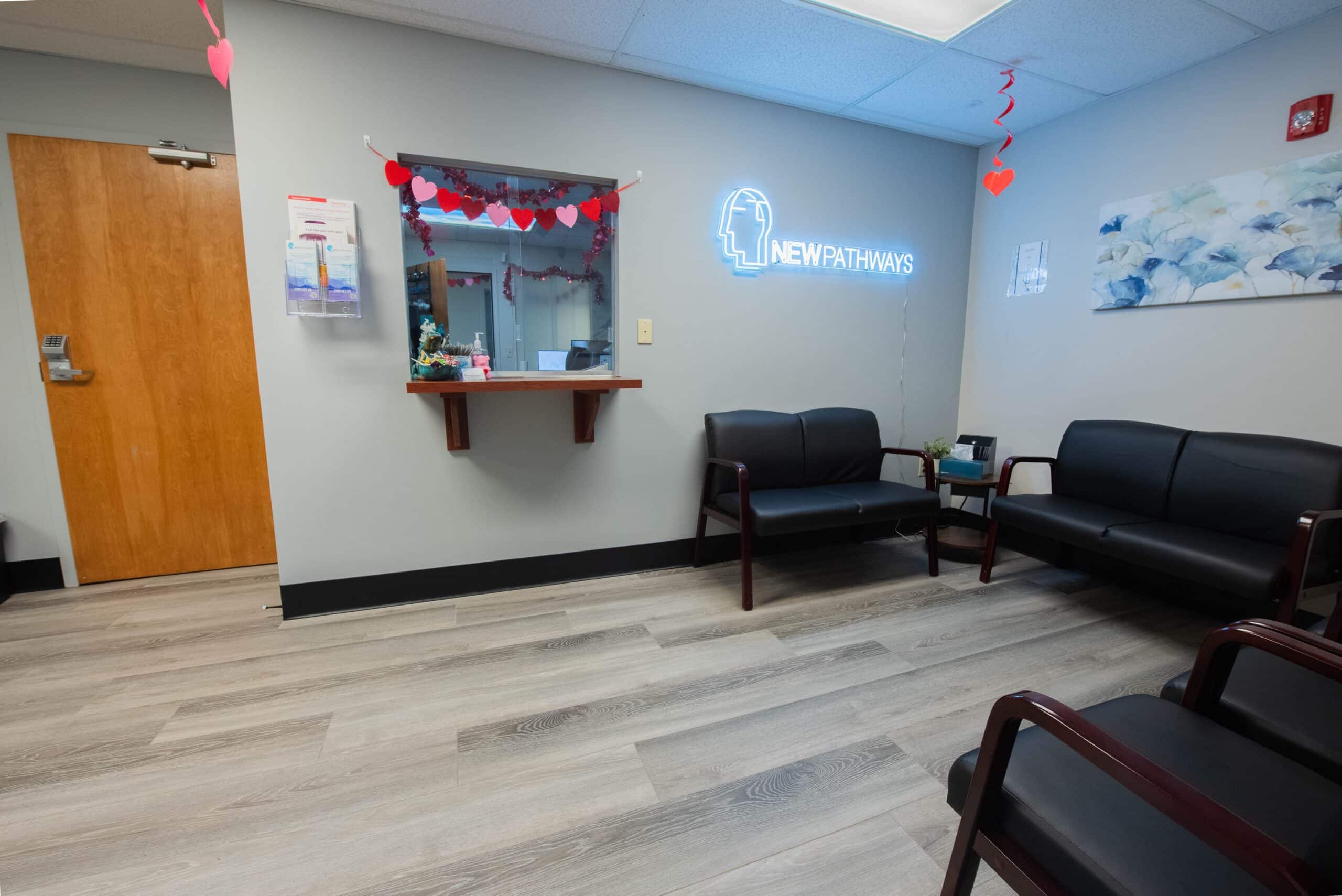
Your visit will feel relaxed and conversational. People from Dublin, Westerville, Upper Arlington, Worthington, and nearby Columbus communities often say the first appointment brought relief simply by feeling heard.
At our Columbus clinic, you’ll have space to explain what’s been difficult, ask questions, and explore what you’d like to change. We go at your pace with anxiety treatment in Columbus, OH — never rushed or pressured.
Anxiety can gradually begin affecting more areas of life, including:
Many people reach out for anxiety treatment in Columbus, OH, when it begins interfering with activities they used to enjoy, or when persistent stress becomes too heavy to manage without support.

1. SCHEDULE
AN EVALUATION
2. FILL OUT
OUR ONLINE FORM
3. EVALUATION
WITH OUR PROVIDER
4. MAKE
APPOINTMENTS
5. RECEIVE
TREATMENTS
6. MAINTAIN
TREATMENT PLAN
Common signs of anxiety in Columbus include persistent worry, difficulty relaxing, irritability, restlessness, and trouble focusing throughout the day. Many individuals from Dublin, Westerville, and Worthington also describe sleep disruption, muscle tension, or physical symptoms like sweating or a rapid heartbeat.
Anxiety often becomes noticeable when daily routines feel harder than they should or when fear shows up without a clear cause. If symptoms begin interfering with work, school, or relationships, it may be time to explore anxiety treatment options in Columbus.
If anxiety starts limiting your ability to function, enjoy activities, or make decisions, it may be time to seek anxiety treatment in Columbus. Many people from Hilliard, Grove City, and Gahanna reach out when worry feels constant, sleep becomes unpredictable, or everyday responsibilities begin to feel overwhelming.
Anxiety is more than occasional stress — it can affect your focus, energy levels, and sense of safety. If symptoms disrupt your life for more than a few weeks, professional support can help.
Anxiety in Columbus often develops from long-term stress, work pressure, past trauma, or a nervous system that stays “on alert.” Residents from Reynoldsburg, Bexley, and Upper Arlington frequently report that financial stress, caregiving responsibilities, or major life changes increase their symptoms.
Biological factors — such as brain chemistry, hormonal shifts, and family history — can also play a role. Environmental factors like traffic, school transitions, or workplace demands may worsen feelings of overwhelm. Anxiety has many causes, but every one of them is valid and treatable.
Yes — anxiety often shows up physically. Many individuals from Worthington, Westerville, and Dublin describe symptoms like chest tightness, sweating, dizziness, nausea, shaking, rapid heartbeat, and digestive discomfort. These reactions come from the body’s “fight-or-flight” system activating repeatedly, even when you’re safe.
Physical anxiety symptoms can appear during work, while commuting on I-270, or during everyday responsibilities around Columbus. When physical symptoms become frequent or confusing, they can make anxiety feel even more overwhelming. Understanding that these sensations are common — and treatable — can help you find the right support.
At New Pathways Clinic, we provide advanced, science-supported treatment options for adults struggling with depression, anxiety, PTSD, bipolar disorder, trauma, OCD, burnout, chronic stress, and other persistent mental health conditions.
Our team works closely with each patient to better understand their condition symptoms, treatment history, and goals in order to help identify the most appropriate path forward.
Anxiety treatment involves persistent worry, fear, or panic that extends beyond typical stress responses and disrupts daily life.
We provide structured assessment and evidence-based treatment options designed to reduce symptom intensity and improve emotional regulation.
Bipolar disorder treatment is characterized by alternating mood states that may include depressive episodes and periods of elevated or irritable mood. Accurate diagnosis and ongoing monitoring are essential to ensure mood stabilization and long-term safety.
Depression treatment can affect mood, energy, motivation, and overall functioning, often interfering with work, relationships, and daily responsibilities.
Our evaluation process identifies the type and severity of depression to determine an individualized treatment plan.
Obsessive-Compulsive Disorder (OCD) involves intrusive thoughts and repetitive behaviors that can become time-consuming and distressing.
Treatment focuses on structured therapeutic approaches and, when appropriate, medication management to reduce symptom severity and improve daily functioning.
PTSD treatment and trauma-related conditions can develop after exposure to distressing or life-threatening events.
Treatment focuses on reducing intrusive symptoms, stabilizing mood, and improving functional recovery through individualized care planning.
Seasonal Affective Disorder (SAD) is a subtype of depression that follows a recurring seasonal pattern, often emerging during fall or winter months. Treatment may include light therapy, psychotherapy, medication management, and advanced options when seasonal episodes remain severe or treatment-resistant.
Suicidal ideation refers to thoughts of self-harm or death that may occur within the context of depression or other psychiatric conditions.
Our care does not include directly treating suicidal ideation, but rather addressing the underlying symptoms with a comprehensive evaluation, safety planning, and mental health services.
Anxiety can make reaching out feel overwhelming. But once you take that first step, you don’t have to navigate this alone.
Our team is here to help you explore a calmer, steadier path forward with warmth and clarity using our anxiety treatments in Columbus, OH.